
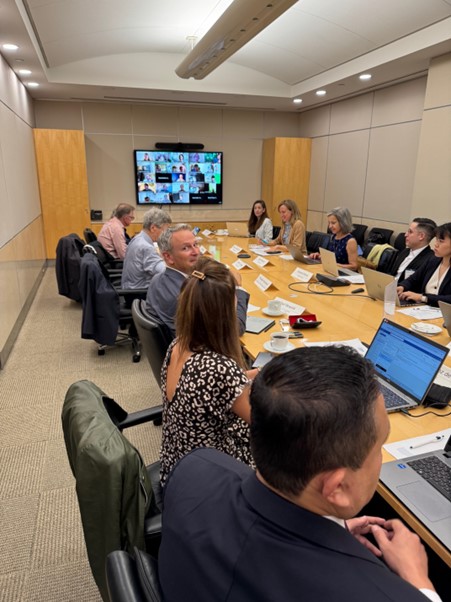
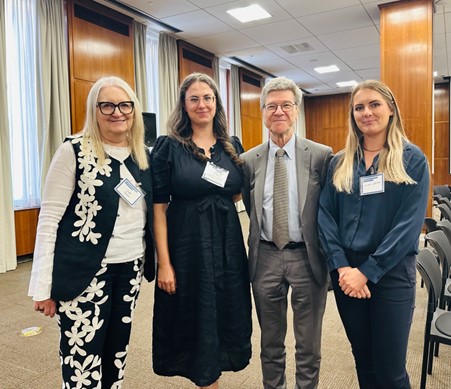
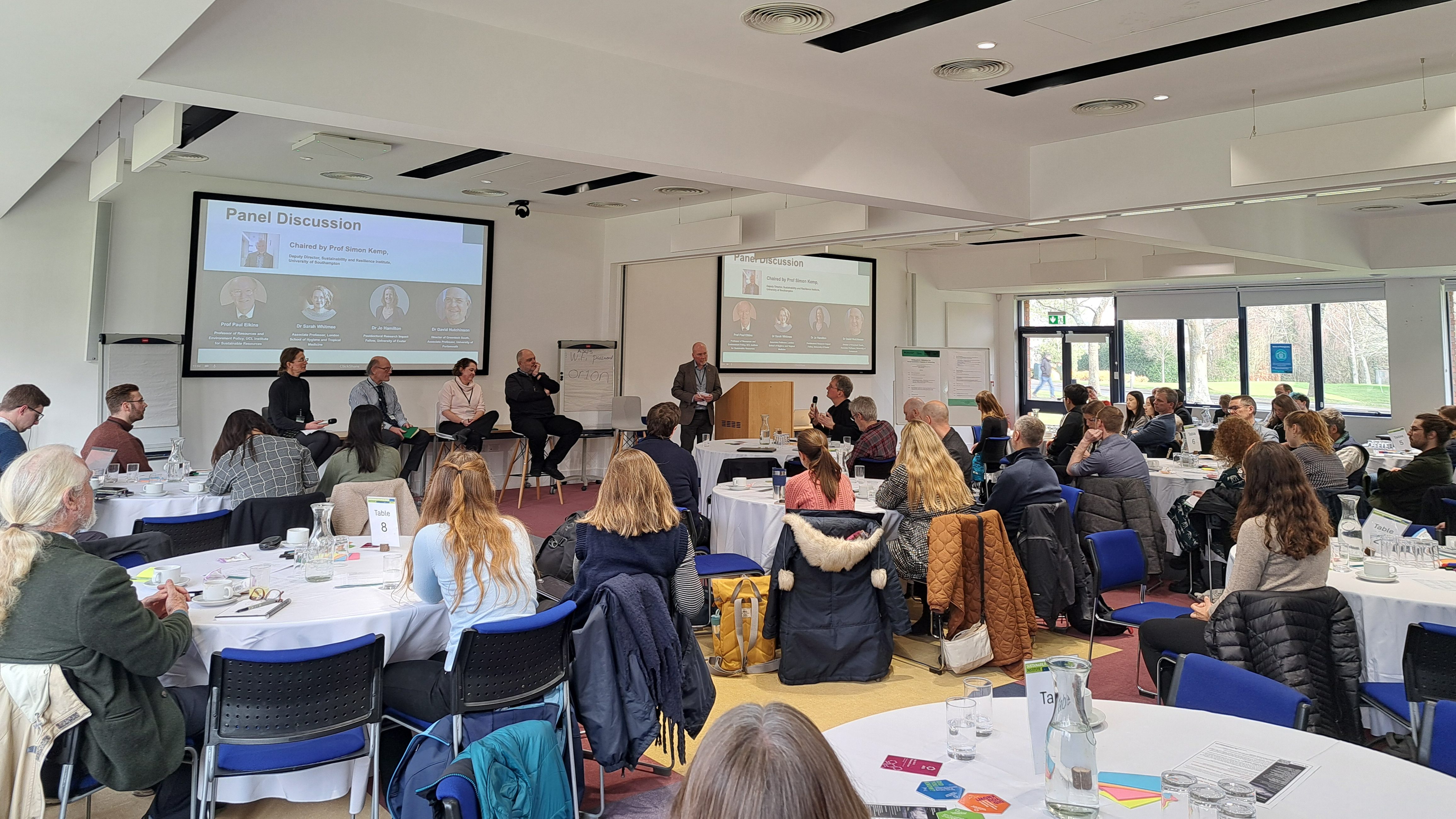
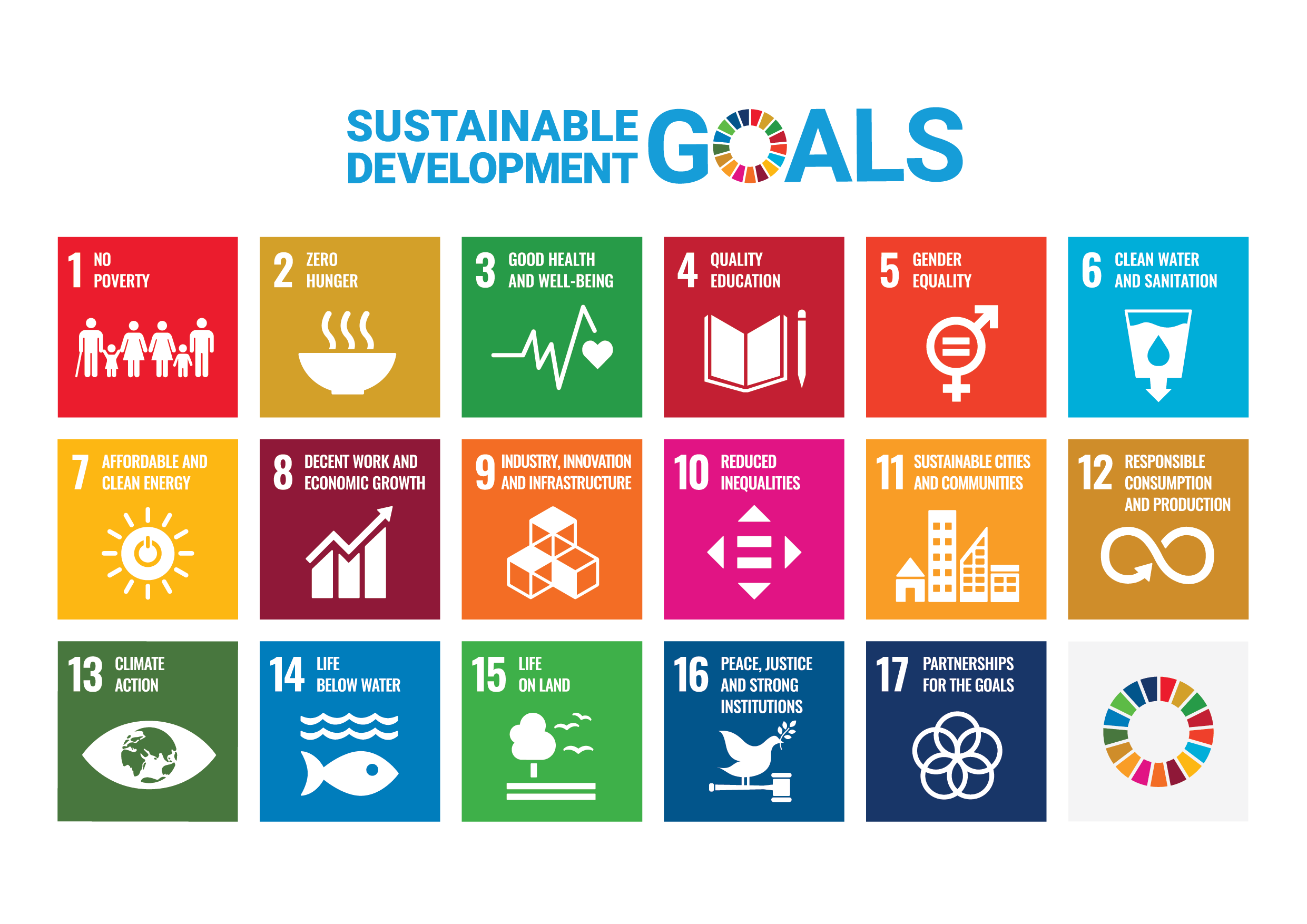
In October, I had the privilege of representing SDSN UK at the SDSN Global and Network Managers Workshop in Kuala Lumpur, Malaysia. The week brought together sustainability leaders and network managers from across the world. Each committed to a shared mission: accelerating the implementation of the Sustainable Development Goals (SDGs) through collaboration, innovation, and knowledge exchange.

A Global Snapshot of Creativity, Solidarity, and Urgency
Across several days of discussions, case studies, and interactive sessions, I was struck by the diversity of approaches being taken to drive sustainable development. From climate-smart cities to innovative financing models, the creativity of solutions emerging worldwide was extraordinary.
One moment that particularly stayed with me was hearing about the immediate impacts of climate change unfolding in the Philippines. During the week of our workshop, the country was struck by three typhoons, forcing campuses to close and students to pivot back to online learning. It was a humbling and sobering reminder that even as we make progress, our communities remain vulnerable to escalating environmental extremes.
Bridging Knowledge and Action: Lessons from Global Networks
Examples from other SDSN networks showcased the power of cross-sector alliances. SDSN Italy’s work with local governments demonstrated how universities can be trusted advisors, embedding SDGs directly into city-level planning. This inspired reflections on how the UK might consolidate currently fragmented local initiatives ensuring that academic, civic, and governmental actors collaborate early and effectively.
Finance and data also emerged as critical enablers. Innovative models, such as those presented by SDSN Benin, illustrated the value of linking academia with financial institutions to mobilise green finance and strengthen data-driven decision making.
SDSN UK’s Contributions to the Global Dialogue
During the workshops, SDSN UK contributed to three key discussions:
- How the interconnected nature of the SDGs can help elevate goals that are currently lagging behind
- The growing role of citizen science in SDG-related data collection
- The need to remain bold in our efforts, even amid geopolitical uncertainties
Lessons from Regional Leaders: Creating platforms for research, innovation and development
The workshop also featured external sessions led by the Asia School of Business (ASB) and the Jeffrey Sachs Centre on Sustainable Development (JSC) at Sunway University. ASB offered insights into how companies can embed sustainability into core strategies, while JSC shared ongoing research on biodiversity, climate resilience, and SDG tracking across Malaysian states.
The SDSN Secretariat also introduced SustainChain, a platform leveraging AI and machine learning to accelerate sustainable progress through a community of over 2,000 organisational members. Over the coming months, SDSN UK will explore how SustainChain can support the SDG Reactor Partnership between SDSN UK and UNGC UK.
Looking Beyond 2030: What Comes Next for the Global Goals?
Another theme that resonated throughout the workshop was the question of what the global agenda should look like after 2030. As the SDG deadline approaches, participants reflected on emerging priorities such as digital transformation, biodiversity restoration, social resilience, and the circular economy. There were even discussions around potential new thematic goals, including responsible AI, an area rapidly shaping our economies and societies, one that we couldn’t foresee in 2015.
For SDSN UK, this presents a clear role: convening researchers, policymakers, civil society, and young people to contribute evidence-based insights and help shape the UK’s voice in the post-2030 agenda. Our partnership with UNGC UK, under the SDG Reactor will bring together events with a focus on practical strategies to contribute to the dialogue.
Building Partnerships for the Future
The workshop concluded with a session on strategic stakeholder engagement, held in conjunction with the World Business Council for Sustainable Development’s 2025 Leadership Program. The interactive session, facilitated by Assoc. Prof. Dr. Priya Sharma of Sunway University, reinforced the importance of cross-sector partnerships in driving systemic change. The SDSN Secretariat also presented the Universities for Goal 13 initiative—hosted by UCL—as an example of successful collaboration between academia and the private sector.
Looking Ahead: Global Learning, Local Action
As I reflect on the week, I’m reminded that while the SDGs offer a global framework, real transformation takes place locally. Our local efforts must be bold, ambitious, and unwavering as we work to shape a just and sustainable future for generations to come. In the spirit of the Sustainable Development Goals, we are called—both as communities and as global citizens—to rise above the narratives that limit our imagination. We must envision and build a world where prosperity is guided not by inherited systems, but by intentional, conscious choices that honour people, planet, and place.

 Sustainable Development Solutions Network UK